How Stump Removal & Grinding Improves Lawn Health and Appearance
A freshly cut tree can solve one problem and leave another sitting squarely in the middle of the yard. The trunk is gone, the branches have been hauled away, and the space looks almost usable again, until your eye lands on the stump. It interrupts the lawn, collects weeds, dulls curb appeal, and often creates more trouble below grade than most property owners expect.
I have seen this play out on every kind of property, from tight suburban backyards to larger rural lots with mature shade trees. Homeowners often assume the hard part ended with tree felling. In practice, the final result depends just as much on what happens next. Proper Stump Removal & Grinding is not a cosmetic add-on. It can change how the lawn drains, how grass establishes, how safely the space can be used, and how healthy nearby plants remain over time.
The improvement is especially noticeable when a stump sits in a high-traffic area. One old maple stump near a front walk can make a cared-for landscape look unfinished for years. More importantly, it can quietly support fungal growth, attract insects, interfere with mowing, and keep roots alive longer than expected. Once the stump is removed or ground properly, the lawn usually becomes easier to maintain and visually cleaner almost immediately.
A stump is never just a stump
What remains after tree cutting is not inert wood. In many cases, the stump is still tied to an active root system for a while, and even when it is no longer biologically active, it still affects the landscape. The root flare may sit several inches above grade. Surface roots can extend well beyond the visible stump. In compacted soils, those roots can alter how water moves through the lawn and make regrading difficult.
That is why experienced Tree Removal Services usually talk about stump work as a separate but related phase, not an afterthought. Removing the trunk addresses overhead risk and clears the canopy. Dealing with the stump addresses the long-term usability of the ground plane.
The species matters too. Some trees decay fairly quickly in warm, moist conditions. Others remain stubbornly solid for many years. Hardwoods like oak can linger as a dense obstacle long after the surrounding lawn has changed. Certain species also send up vigorous sprouts from the stump or roots, which leads to repeated trimming and a patchy appearance in the grass.
Lawn health starts below the surface
People tend to judge a lawn by what they can see, color, thickness, and uniformity. Those visible qualities depend on conditions underground. A stump and its remaining root mass can compromise those conditions in several ways.
First, they compete for space. If you are trying to seed or sod over an area with a large buried root crown, you are working over uneven organic material that will break down slowly and unpredictably. That makes it hard to establish a smooth, stable lawn surface. You may get shallow rooting in the new turf, then settling a year later as wood decays and pockets collapse.
Second, stumps influence moisture. The soil around them can become either too dry or too wet depending on grade, soil type, and the size of the root mass. I have seen depressions form around old stumps where water gathers after rain, turning one section of lawn into a recurring muddy patch while the rest of the yard drains normally.
Third, decaying wood changes the local biology. Some decay in soil is natural and even beneficial in the right context, but a large stump in the middle of managed turf creates concentrated fungal activity and harborage for insects. That does not always mean a crisis, but it is rarely ideal for a clean, resilient lawn.
When the stump is ground below grade and the site is restored correctly, grass roots can expand into a more consistent growing environment. That alone can improve color and density over the next growing season.
The visual improvement is immediate, but not superficial
There is a reason real estate professionals, landscape contractors, and property managers push for stump removal before listing a home or completing a renovation. A stump makes the yard look interrupted. Even a beautiful lawn reads as incomplete when a rough cylinder of wood sits in the middle of it.
Appearance is not just about neatness. It is about proportion and continuity. A stump draws attention because it breaks the visual plane of the yard. If it is surrounded by bare dirt, volunteer shoots, or a ring of weeds, the problem becomes more obvious. Once the stump is gone and the grade is blended, the eye reads the space as intentional again.
This matters in front yards, where curb appeal carries financial weight, and in backyards, where people want usable outdoor space. Families notice the difference right away. The area suddenly feels larger. Patio lines make more sense. Mowing patterns become smoother. The lawn photographs better, which may sound minor until you are trying to market a property or simply take pride in it.
Why mowing and maintenance get easier
One practical benefit of Stump Removal & Grinding is that routine lawn care becomes far less frustrating. Anyone who has had to steer around a stump every week understands this. Even when operators are careful, stumps invite accidental contact with mower decks, trimmers, and edging tools.
That creates three recurring problems. The first is equipment wear. Striking roots or exposed wood can damage blades and throw off cuts. The second is turf scalping around the stump because mowing lines have to tighten and shift abruptly. The third is labor. What should be a simple pass becomes a stop-and-start process, especially on larger properties with multiple old stumps.
Ground stumps also allow proper topdressing and reseeding. Once the area is filled and leveled, maintenance crews can treat it like the rest of the lawn. Over time, that uniformity pays off in better mowing quality and fewer weak spots.
Pests, fungi, and unwanted regrowth
Stumps often become staging areas for problems homeowners do not notice until damage spreads. The exact risk depends on tree species, climate, and site conditions, but the pattern is familiar. Moist, decaying wood attracts insects. Some are harmless decomposers. Others can become nuisances or contribute to damage in nearby wooden structures if conditions are favorable.
Fungal growth is another common concern. Mushrooms around a stump are not automatically dangerous, but they signal ongoing decomposition. In a naturalized woodland edge, that may be acceptable. In a formal lawn or family play area, it is usually less welcome. Pets and children are part of that equation. Many property owners prefer not to manage repeated mushroom flushes in the middle of the turf.
Regrowth can be just as annoying. Certain species, including some elms, poplars, and fruit trees, are notorious for sprouting from the stump or roots. Those shoots draw energy, clutter the area, and force repeated cutting. If you leave the stump in place, you may be signing up for years of maintenance that produces no real landscape value.
This is one reason a Certified Arborist Consultation can be useful before or after tree removal. An arborist can identify species-specific behavior, explain whether suckering is likely, and recommend the most sensible next step based on the location and future plans for the site.
Safety matters more than people expect
A stump is an obvious trip hazard, but the safety issue goes further than the visible wood. Surface roots can lift slightly above grade, particularly as surrounding soil erodes or settles. In shaded areas, moss and moisture make them slick. In play areas, a child running across the lawn does not notice a stump the way an adult walking carefully does.
Night visibility is another factor. A backyard that seems manageable in daylight can become hazardous in low light during a gathering, especially if the stump sits just outside the strongest patio illumination. I have also seen stumps create problems for snow clearing in colder climates, where they disappear under a light accumulation and catch shovels or snowblower skids.
For commercial properties and rentals, that hazard has an added liability dimension. Owners who remove stumps are not only improving the landscape, they are reducing a predictable obstacle.
Grinding versus full removal
Homeowners often ask whether they need full extraction or if grinding is enough. The answer depends on use, budget, and the size of the root system. In many residential lawns, grinding is the most practical option. A stump grinder reduces the wood below the soil surface, often deep enough to allow soil replacement and turf establishment. It is efficient, less disruptive than excavation, and suitable for most standard lawn restoration projects.
Full stump removal, by contrast, involves extracting the stump and major root crown. That can be necessary when construction is planned, when the area needs deep excavation for utilities or footings, or when a particularly large root plate would otherwise interfere with hardscaping. It creates a bigger hole, more soil disturbance, and typically more restoration work afterward.
The best choice usually comes down to future use. If you plan to plant grass, grinding often does the job well. If you want to install a foundation, retaining wall, or pool deck nearby, complete removal may be worth the added disruption.
What proper site restoration looks like
The grinding itself is only part of a successful job. A lawn does not recover because the machine left. It recovers because the area is finished correctly.
A sound restoration process usually includes:
- Grinding to an appropriate depth for the intended use of the area.
- Removing or managing excess wood chips rather than burying a thick layer where turf needs to root.
- Backfilling with suitable soil and correcting grade to match surrounding contours.
- Seeding or sodding based on season, sun exposure, and traffic expectations.
- Monitoring settling over the following months and adding soil if needed.
That second point causes a surprising number of callbacks. Fresh grindings are bulky and carbon-rich. If they are left in a dense pocket directly under new turf, decomposition can rob the soil of available nitrogen and slow establishment. Some chips can stay, but too much woody material under the surface often leads to poor grass performance. Good contractors account for this and explain what the site will need after the machine work is done.
The role of tree care planning
Stump work makes even more sense when viewed as part of broader tree care. Sometimes the tree was removed because it was dead, storm-damaged, or poorly placed. Other times, the removal followed years of decline that might have been managed differently with earlier attention.
That is where Tree Pruning & Crown Shaping, Tree Cable and Bracing, and periodic arborist review come into the conversation. Not every compromised tree needs to come down. Selective pruning can reduce end weight, improve clearance, and lessen stress on weak limbs. Bracing or cabling can extend the safe life of a structurally valuable tree in some situations. A trained eye can also tell you when preservation efforts are no longer sensible and when removal is the more responsible option.
On a mature property, decisions should be connected. If one tree has been removed and the stump remains, it is a good moment to evaluate neighboring trees for root competition, canopy balance, and future risk. The healthiest lawn often comes from integrated management rather than one-off fixes.
After storms, stumps can complicate recovery
Following wind events, ice storms, or saturated soil failures, Emergency Tree Services often focus first on access, hazard reduction, and stabilization. That is appropriate. The priority is making the site safe. But once the trunk and limbs are cleared, the remaining stump may still obstruct repairs, drainage correction, or replanting.
Storm-damaged trees can leave irregular break points and partially uplifted root plates. In those cases, Dangerous Tree Assessment and Removal is not just a removal decision, it is a site safety decision. If the root system shifted, ground conditions nearby may be unstable. Grinding or removal afterward helps restore the area so it can be used safely and repaired properly.
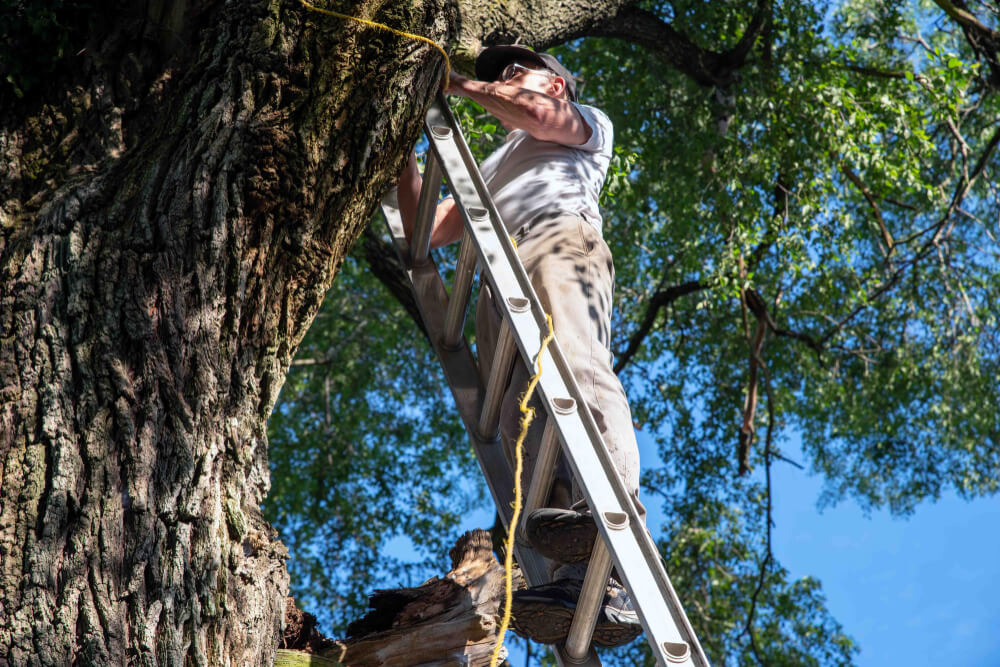
I have seen homeowners postpone stump work after a storm because they are understandably tired of dealing with contractors. Six months later, they are trying to reseed a lawn around a decaying stump, tire tracks have hardened into ruts, and what could have been one coordinated project has become a string of small frustrations. When possible, tying stump restoration into the initial response usually produces a cleaner result.
When leaving a stump might make sense
There are situations where removing a stump is not necessary. In a naturalized back corner of a property, a stump can serve ecological value, hosting insects and slowly returning organic matter to the soil. Some owners turn stumps into rustic seats or pedestal features, particularly in woodland gardens. In remote areas, the cost of removal may not align with the benefit.
But those exceptions work best when they are intentional. The stump should be out of main traffic patterns, away from mowing routes, and consistent with the landscape style. A decorative or habitat stump in a meadow edge is a very different thing from a half-rotted obstacle in the middle of a formal lawn.
That distinction matters because many people delay removal under the assumption that nature will take care of it Tree Pruning & Crown Shaping quickly. Often, it does not. Even when decay advances, the stump can remain unsightly and inconvenient for years.
Replanting after stump work
Many homeowners remove a tree and immediately want to replant in the same spot. That instinct is understandable, especially when shade, screening, or symmetry mattered. Still, the exact location deserves some thought. The old root zone may not be ideal for a new tree right away, particularly if much of the space is still occupied by larger roots or if the soil was heavily disturbed during removal.
A nearby offset planting is often more successful than placing the new tree directly over the old stump location. The species should match the site, not just the memory of the tree that was lost. That is another case where a Certified Arborist Consultation earns its keep. A good arborist can recommend spacing, species, and planting depth that support both the new tree and the lawn around it.
If wildfire risk is part of the property context, replanting should also align with defensible space goals. Wildfire Mitigation Tree Services often involve more than removal. They include spacing guidance, ladder fuel reduction, and species selection that lowers risk without stripping the landscape of value.
Cost, timing, and realistic expectations
Prices for stump work vary with diameter, species, accessibility, rock content, and the number of stumps involved. A single small stump near the curb is a different job from several large hardwood stumps behind a fence with limited machine access. Homeowners should also understand that restoration adds value and cost. Grinding alone is not the same emergency tree removal services as grinding, backfilling, grading, and establishing turf.
Season matters too. Grinding can often be done through much of the year if access and soil conditions permit, but the best time to restore the lawn depends on your climate. Cool-season grasses establish best in cooler windows, while warm-season lawns follow a different calendar. If the work happens outside prime seeding season, ask how the site will be stabilized until permanent turf can go in.
One practical note from experience: take photos of irrigation lines, invisible dog fences, and shallow utilities before work begins, and make sure the contractor knows where they are. Stump grinders are precise in skilled hands, but site awareness prevents avoidable damage.
Choosing the right professional
Not every company that cuts trees is equally strong at finishing the site well. If lawn recovery matters to you, ask detailed questions. Do they offer both Tree Removal Services and stump grinding, or subcontract one phase? Will they haul debris, remove excess grindings, and restore grade? Have they worked with properties similar to yours in soil type and access constraints?
A strong contractor will also be honest about limits. If a stump sits near a retaining wall, septic component, utility trench, or mature specimen tree, the method may need to change. That is where judgment separates a careful operation from a rough one.
Look for signs of a complete approach rather than a narrow task mindset. Companies that also handle Tree Pruning & Crown Shaping, Emergency Tree Services, and Dangerous Tree Assessment and Removal often bring a broader understanding of site conditions and long-term tree management. That does not automatically make them better at every task, but it usually means they are thinking beyond the machine and into the landscape as a whole.
The lawn you want is often hiding under the problem you postponed
Most homeowners adapt to a stump for longer than they should. They mow around it, trim around it, reseed around it, and eventually stop noticing how much it lowers the quality of the yard. Then it comes out, the grade is corrected, fresh turf goes in, and the whole space feels more finished than they expected.
That response is common because stump removal solves multiple issues at once. It improves line of sight across the yard. It reduces maintenance friction. It supports better grass establishment. It removes a safety obstacle. It also closes the loop on tree work in a way that makes the property feel cared for rather than half-completed.
A healthy lawn depends on more than fertilizer and irrigation. It depends on clean grading, open rooting space, good light, manageable traffic, and the absence of avoidable barriers. Stumps interfere with all of those. Whether the tree came down for safety, design, storm damage, or disease, taking the extra step to address what remains at ground level is often what turns a tree removal into a real landscape improvement.
Name: Ace Tree Services Ltd.
Address: 4656 Wallace Hill Rd, Kelowna, BC V1W 4C2, Canada
Phone: 250-212-9593
Website: https://acetree.ca/
Email: [email protected]
Hours:
Sunday: Closed
Monday: 7:00 AM–5:00 PM
Tuesday: 7:00 AM–5:00 PM
Wednesday: 7:00 AM–5:00 PM
Thursday: 7:00 AM–5:00 PM
Friday: 7:00 AM–5:00 PM
Saturday: 7:00 AM–5:00 PM
Time zone: Pacific Time
Open-location code / Plus code: RHF8+8G Kelowna, British Columbia, Canada
Map/listing URL: https://www.google.com/maps/search/?api=1&query=Google&query_place_id=ChIJxRVIBx2LfVMRNRSkp6-IC0U
Embed iframe:
Socials:
https://www.facebook.com/p/Ace-Tree-Services-61585901931447/
Ace Tree Services Ltd. provides professional tree care from its Kelowna location on Wallace Hill Road.
The official website lists tree removal, stump removal and grinding, tree pruning and crown shaping, emergency tree services, certified arborist consultation, dangerous tree assessment and removal, tree cabling and bracing, and wildfire mitigation.
Ace Tree Services serves homeowners, businesses, and property owners in Kelowna and throughout the Okanagan Valley.
The company’s official site highlights ISA Certified Arborist support, local Okanagan experience, and fully insured tree service work.
Customers can contact Ace Tree Services for planned tree maintenance, high-risk removals, storm-related tree concerns, pruning, stump grinding, and arborist consultation needs.
The supplied public listing address is 4656 Wallace Hill Rd, Kelowna, BC V1W 4C2, near rural and residential service areas in southeast Kelowna.
For tree services in Kelowna and the Okanagan, call 250-212-9593, email [email protected], or visit https://acetree.ca/
The public map listing uses plus code RHF8+8G Kelowna, British Columbia, Canada and can help customers find Ace Tree Services Ltd. near Wallace Hill Road.
Popular Questions About Ace Tree Services Ltd.
What does Ace Tree Services Ltd. do?
Ace Tree Services Ltd. provides tree removal, stump removal and grinding, tree pruning and crown shaping, emergency tree service, certified arborist consultation, dangerous tree assessment and removal, tree cabling and bracing, and wildfire mitigation.
Where is Ace Tree Services Ltd. located?
Ace Tree Services Ltd. is listed at 4656 Wallace Hill Rd, Kelowna, BC V1W 4C2, Canada.
What phone number should customers call?
Customers can call Ace Tree Services Ltd. at 250-212-9593.
What is the email address for Ace Tree Services Ltd.?
The supplied email address is [email protected].
What are Ace Tree Services Ltd.’s hours?
The supplied listing hours show Monday through Saturday from 7:00 AM to 5:00 PM, with Sunday closed, Pacific Time. The official website lists 7:00 AM to 5:00 PM, Monday through Friday, so customers should confirm Saturday availability before booking.
Does Ace Tree Services Ltd. provide emergency tree service?
Yes. The official website lists emergency tree services, including emergency tree removal, dangerous tree assessment, emergency stabilization, and limb or branch cleanup.
Does Ace Tree Services Ltd. offer arborist consultations?
Yes. The official services page lists certified arborist consultation as one of the company’s Okanagan tree services.
Does Ace Tree Services Ltd. provide stump grinding?
Yes. The official services page lists stump removal and grinding as a service.
What areas does Ace Tree Services Ltd. serve?
The official website states that Ace Tree Services serves Kelowna and the Okanagan Valley.
How do I contact Ace Tree Services Ltd.?
Call 250-212-9593, email [email protected], visit https://acetree.ca/, or use the listed social profile: Facebook.
Landmarks Near Kelowna, BC
Wallace Hill Road: The road listed for Ace Tree Services Ltd. and a practical reference point for the company’s Kelowna location.
East Kelowna: A nearby rural and residential area where tree maintenance, pruning, removals, and wildfire mitigation can be important for property owners.
Myra-Bellevue Provincial Park: A major outdoor landmark southeast of Kelowna and a useful reference for the surrounding hillside and forested areas.
Gallagher’s Canyon: A nearby Kelowna community with residential properties, mature trees, and landscape maintenance needs.
Kettle Valley: A southeast Kelowna neighborhood with homes, parks, and landscaped properties.
Mission Creek Greenway: A well-known natural corridor in Kelowna and a local reference point for tree-lined recreation areas.
Orchard Park Shopping Centre: A major Kelowna retail landmark and citywide reference point.
Downtown Kelowna: A central business and residential district within Ace Tree Services’ broader Kelowna service area.
Okanagan Lake: A major regional landmark running through Kelowna and the surrounding Okanagan Valley.
Mission Creek Regional Park: A recognizable Kelowna park and natural landmark with extensive trees and trails.
Rutland: A large Kelowna community with residential and commercial properties that may need tree service support.
Glenmore: A Kelowna neighborhood with homes, parks, and established trees.
Lower Mission: A residential and lake-adjacent Kelowna area where pruning, tree health, and property safety can matter for homeowners.
Kelowna International Airport: A major transportation landmark north of central Kelowna.
West Kelowna: A nearby Okanagan community across the lake and a practical regional service reference.
For tree removal, stump grinding, pruning, crown shaping, emergency tree service, arborist consultation, dangerous tree assessment, cabling and bracing, or wildfire mitigation near these Kelowna and Okanagan landmarks, contact Ace Tree Services Ltd. at 250-212-9593, email [email protected], or visit https://acetree.ca/